
Zheravna
A fiction

It has been a year since I became an author of published fiction. My story, ‘Zheravna’, got a run in Meanjin, Australia’s oldest literary journal, today last year. It ran in the second-to-last issue of the journal prior to its controversial axing by Melbourne University Press. I assumed I had whatever the opposite of the Midas touch is, the kiss of death. That seemed about right.
Thankfully, MUP’s act of “utter cultural vandalism” was counteracted by QUT’s adoption of the journal, meaning that it headed back home to Queensland, where it was born, and that I am not in fact a walking, talking curse.
Here is the piece. It was an experiment, an attempt to write fiction in my journalistic voice, to see if that would work. I am very proud of it, much trouble though it may have caused me since.
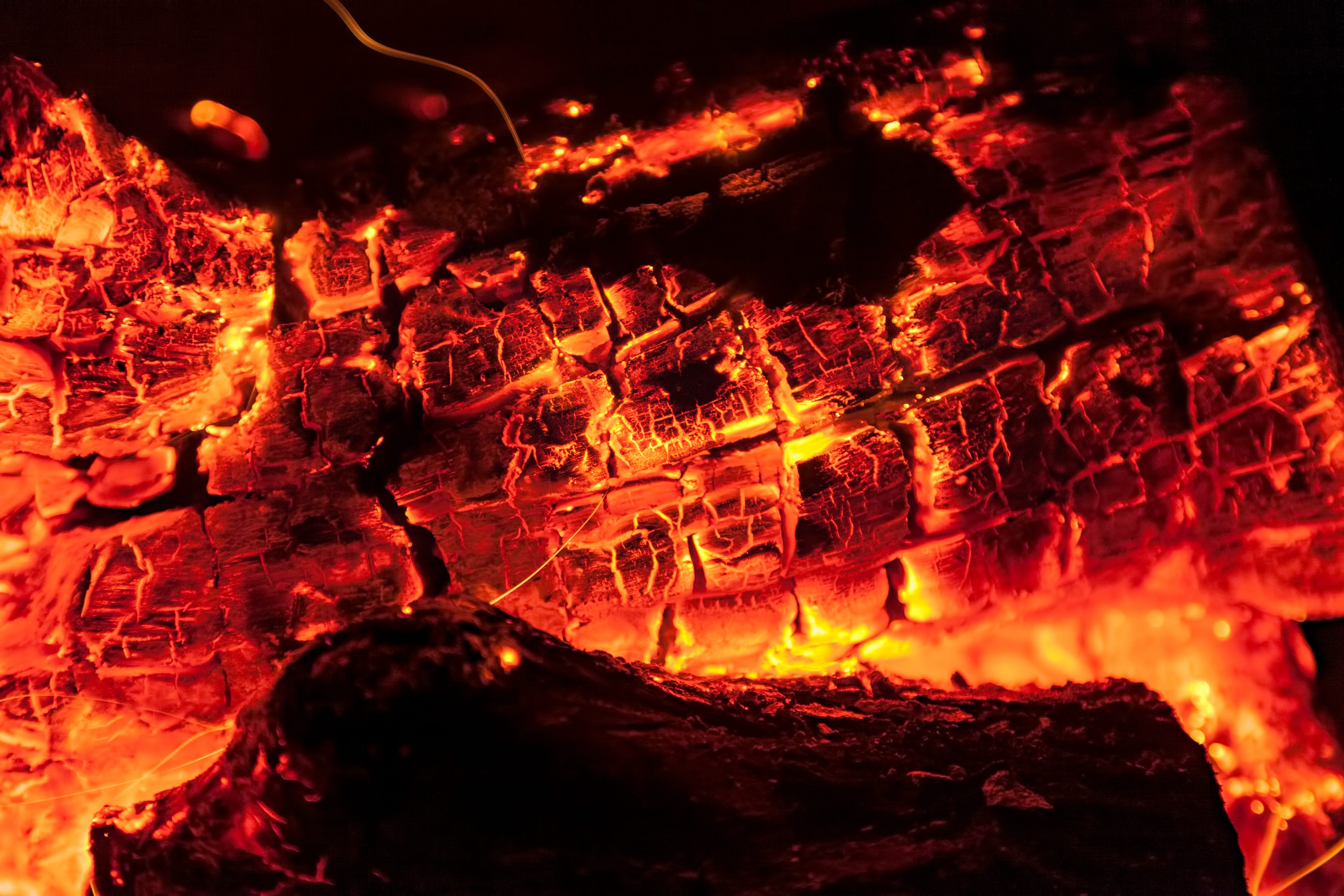
Researchers into olfactory memory, that curious nostalgia of the nose, have put it all down to the limbic system. I have read but cannot always parse the literature: the academics tend to lose me at the orbitofrontal cortex. But the basic proposition is this. Unlike other sensory inputs, which are translated from physical experience into data by an egg-shaped relay station called the thalamus, scent is processed elsewhere, in the brain’s olfactory bulb, which is directly connected to the hippocampus and amygdala, which are where memory and emotion reside. How the hardwiring happens, I couldn’t tell you, and I am similarly at a loss to explain why some scents are more triggering than others. For me, there are two that never fail to transport me, my own personal madeleines.
The first is really a mixture of smells—of diesel, barbecued meats, human sweat—which, wherever I am in the world, immediately takes me back to Hong Kong, to my first overseas trip, to the tender age of twelve. The second is the smell of wood smoke, which, for a long time, was similarly connected to my childhood. It evoked bonfires on my grandfather’s farm, my bright-blue gumboots a little melted around the soles. It evoked Friday-night football on free-to-air television. We would pull the couches away from the wall and push them a little closer to the screen. I can see my family lined up along these couches, scarves in team colours wrapped dutifully around their necks, and me sitting with them, a little closer to the wood heater, a book open but scarcely read in my lap. It was not that I was interested in the game that caused me to sit with my family, but ritual, and it was not the old cathode ray that distracted me from my reading, but rather that my proximity to the fire almost invariably lulled me to sleep.
Another thing I couldn’t tell you is how the memories to which scents are connected change, or, to put it another way, how a scent like wood smoke, so long connected to one thing, could somehow suddenly start calling to mind another. I know that the piriform cortex of the olfactory bulb serves as a kind of long-term storage facility for scent-related recollections, and I know, too, that the orbitofrontal cortex plays a role in determining which scents are to be archived in this way. Researchers in Germany have successfully used electrical impulses to trigger such memory creation in the piriform cortexes of rats. What isn’t clear to me is how it happens in the absence of German scientists or electrodes.
It was my trip to Zheravna a couple of years ago that caused me to take up this line of inquiry. It was a very wood smoke-heavy village. We had come down out of Romania from Bucharest on a crisp blue morning in mid-October and set off from the border in a dilapidated mini-van for the foothills of the Balkan Mountains. But we had gotten our timetables mixed up, or I had, and by dusk, our original ride long gone, we were still waiting on a station platform some forty kilometres from our destination. We were waiting for a bus, or at least another mini-van, that no longer seemed to be coming. There was an old Bulgarian man behind the desk, who didn’t speak a lick of English, and nothing beyond the road but forest, which appeared blue at that hour as the sun set abroad over indigo mountains. It was cold. For the first time in my life, and not without reason, I found myself seriously worrying about wolves.
Eventually, after the old man made a call, an ancient Moskvitch pulled up beside us and the man with gold-capped teeth within it took us for a ride in both senses of the term. By the time we made it to Zheravna, many levs lighter than we probably should have been, everywhere in town had a fire going. You could smell the smoke on the frigid air, make out the departing souls in the moonlight. My hippocampus and amygdala went immediately into overdrive, though I would not have put it this way at the time. It was only when my other senses caught up, having made their way only haltingly through the thalamus, that I began to question the wisdom of having so many indoor fires going, in a village made entirely of wood.
This was the reason we were here in the first place: to marvel at Zheravna’s wood. Mostly built in the 1800s, during a period known as the Bulgarian Revival, the buildings that made up the village, with elaborately carved ceilings and doors and windowsills that spoke to some former regional prosperity, were mostly empty, shuttered now. They still attracted thousands of visitors a year, but that must have been when the weather was better. The couple who showed us to our room at the guesthouse, and me how to operate the wood heater there, said we were their first guests in months. There was only one restaurant open and, aside from a doctor and his wife from Sofia, with whom we exchanged a few basic pleasantries, we were the only people patronising it.
We awoke the next morning to a biting cold. I had not tended the fire during the night. I tended it now, squatting before the black stove in the corner and piling the provided kindling into it. There was something methodical, even meditative, about the process, which reminded me a little of cooking or writing: the construction of the pyre, the addition of tinder, the striking of the match. I did what I had once seen my father do, and my grandfather before him, on the farm, blowing softly against the tinder until it caught. I took the cooking metaphor a little too far, sitting there pushing the kindling around with the poker, as though it were garlic and onion in a pan, before I caught myself, wondered where I had gone to, and finally shut the stove.
We spent the morning wandering around taking photos: me in front of this house, her in front of that one. We bought a loaf of black bread and a stick of sudzhuk and took them back to the guesthouse to eat. The couple had given us a knife. I spent the rest of the afternoon alternating between the bed, where I was pretending to read a book about the Ottomans, and the stove in the corner, again tending the fire. The cheese we had brought from Romania was sweating, beads dropping down it in the heat I had made.
You don’t have to keep checking it, she said, after I had gotten up to poke around the fire again. It was the third time I had done so in less than an hour. It isn’t going out.
It might, I said. It had done so during the night. But the truth was that I liked looking into it, liked playing with it, liked the smell. The couple had provided us with more than kindling: little wooden logs were on hand, too, in a little wooden box, on the balcony outside our door, both of which were also made of wood.
The only reason I eventually stopped messing with it was that I was adding logs that didn’t need to be added, breaking down previous ones before they were ready, and I was worried that I would soon have to ask the couple for more. It was in any case time to go to dinner again. I suspect I’d read about three pages in as many hours. I had spent most of the afternoon, when I wasn’t playing with the fire, passing in and out of sleep in front of it.
The doctor and his wife were at the restaurant again, as was a young fellow, his hands large and work-calloused. He sat alone in the corner, his only company a carafe. He appeared to be a local. We ordered a carafe of our own, and two glasses, but before we were able to pour ourselves drinks, the doctor and his wife asked us to join them. This, I thought, had been bound to happen. It doesn’t much matter where you are in the world, strangers who begin to recognise one another will eventually experience some form of gravitational pull.
He introduced himself as Doctor Vazov and his wife as Sofia. The latter was local, or at least once had been, and the couple had come to visit her mother.
The woman was old and very poorly. There was little he could do, Doctor Vazov said, on the grounds that he was not himself an oncologist. He had offered to put her in touch with experts, but she had not taken him up on this. Unless she was willing to relocate to the city, which she wasn’t, he didn’t see her lasting much longer. The winters here are unpleasant, he said.
Sofia said something in Bulgarian, sadly, and the local fellow in the corner snorted. Doctor Vazoz pretended not to hear him and translated for us instead.
She says that, in springtime, it is pretty, he said.
We were sitting around a small table by the window. The thing about his mother-in-law’s cancer had seemed a very personal thing to have shared with two strangers within only moments of meeting them. We made what we thought were appropriate noises. My partner said it was good of them to have come. I imagine it is very difficult, she said.
Yes, said Sofia, this time in English. It is very difficult.
Our conversation turned to other topics: about their life in Sofia, about ours on the road. We ate a simple stew of meat and potatoes and eventually all got a little drunk. At some point, the doctor ordered rakija, insisting we try the national spirit. His mood and mine were lifting as we went. My partner’s and Sofia’s were going the other way. I assumed this was happening for similar reasons: that Sofia, like my partner, knew too well what the good doctor’s libations might lead to should his mood become too elevated. But, in fact, she was going head-to-head with us and becoming melancholy for reasons of her own. He was in the middle of explicating the finer details of his practice when she turned to my partner and said: I think that perhaps you maybe do not understand me.
What do you mean? my partner asked.
You say it is difficult. You mean, though, my mother. I mean coming to Zheravna. Coming to Zheravna is not my idea. Coming to Zheravna is his.
She spat the last word in the doctor’s direction.
I spend my life getting out of Zheravna, she said. What is in Zheravna for me?
She said she had known that this day would come: when her mother’s health would force her back. She said that her mother had been planning it for years.
Planning? Doctor Vazov said. To get cancer? Now, really, Sofia—
Shut up, she said, and waved him away. I am not going to stay, though, she added. She thinks I am going to stay, but I won’t.
The fellow in the corner snorted again, more loudly and more pointedly than before.
Mŭlchi, Ivan Batinkov! she shouted at him. Samo se prestruvash che si izbral da ostanesh tuk!
That is Ivan Batinkov, she said. He likes it here, but he is an idiot.
I was loath to admit that I knew where she was coming from and didn’t say so now. But her sentiments were recognisable as things I had said some version of before, though the bitterness with which they were expressed was new to me. That presumably, in some wooden house around the corner, her mother was in the process of actively dying, while she was in here, drinking wine and resenting her for it, was actually a little shocking. My partner cocked an eyebrow at me, as though to make a point. I knew that one day I would have to go home, and that I would resent it in my turn, and I was guilty about this in advance of it happening, though this anticipatory guilt in no way lessened the inevitability of it.
Now, taking the bottle from her husband as though it were a baton, it was Sofia who insisted we drink. There was nothing else to do here, she said. We might as well get drunk. At a certain point, my partner took her leave of us and skulked into the night. I cannot remember whether she asked me to go with her. It is fair to assume that she did, perhaps even that she implored me to, and that I drunkenly declined. Time passed. I vaguely recall Doctor Vazov telling me, at one point, that I was his brother, but that remains the extent of my recollections, beyond the heady aniseed fumes of the rakija.
We woke up the next morning to the couple from the guesthouse with a few local men who claimed to be police officers. There had been a murder: the fellow from the night before, Ivan Batinkov, had been found dead sometime around dawn. He had been discovered beaten to death with a cobblestone, they said, on one of the cobblestoned alleys between two cobblestoned retaining walls. They wanted to ask where I had been the night before.
I told them that I had been at the restaurant, but also that I had come home immediately afterwards. I said that I had come home and tended the fire, and that I had tended it throughout the night. This was true. Every now and then, while she was sleeping, I had gotten up and opened the stove and gazed awhile at the glowing coals. Towards morning, after I had finally gone to sleep, I had awoken in the half-light of dawn to find that the fire was in the process of dying, and, without any newspaper on hand with which to feed it, and worried that the kindling may not catch from the last remaining embers alone, I had torn two pages from the book I had been reading and fed them to it instead. When these had not worked, I had torn out two more, then two more after that, and two more every couple of minutes until I had reached my bookmark and the extent of my progress. Eventually, not least because I had not much been enjoying the book, I had put the whole thing into the stove and closed it.
How do you explain this, then? asked the men.
It was the knife that the couple had given us the previous afternoon, with which we had eaten the sudzhuk and the cheese.
Was his head smashed in with a rock, I asked, or was he stabbed to death with a knife?
You tell us, said the men.
Maybe it was a wolf, I suggested.
A wolf did neither of those things, they said. There are no wolves in Bulgaria.
Actually, there are more than a thousand wolves in Bulgaria, but this did not seem like the moment to say so. Furthermore, while the men were correct that wolves could not have done either of those things, that was obviously not what I had been suggesting. It did not seem the moment to say this, either.
They took me in for further questioning, a pointless, somewhat ridiculous affair, conducted in halting, fumbling English, of which the men had only what I believe is called a smattering, in a small wooden room in a small wooden building on the outskirts of the small wooden town. The bars of the cell ran from the floor to the ceiling and were the first architectural elements I had seen here, outside of the stove in our room, that had not been made of wood. This did not strike me as a positive omen.
The person they wanted to talk to, I said, was the doctor from Sofia and his wife, who shared that city’s name. They told me that no such couple existed. When I asked to see my partner, they told me that she had left Zheravna. I asked whether or not she had left word for me. They said that she had not.
I spent that night sitting alone in the cold, with only a thin grey blanket to cover me. I thought back on the night before, though the drinks we’d had made it difficult to remember. At times, my memories recalled an old movie, a black-and-white farce played for laughs at double speed, and, at others, security footage, more objective and damning. The fact was that I could not remember much of the evening prior: between the fellow’s stumbling departure from the bar and my own first flickers of memory from the witching hour, when I was sitting in front of the stove and its coals, a wine-dark emptiness prevailed in my mind, and, having lost time before in this way, I was not sure what to make of it.
I wondered, looking out the window, whether in fact I hadn’t killed him. For at least ten years prior to this, unbeknown to literally everyone in my life, I had been having a recurring dream in which I murdered, or rather had already murdered, someone. I didn’t know who the person was: that detail was never revealed to me. But once every six months or so, sometimes more often, I had dreams of great vividness, of great visceral horror, in which I interred the body of someone unknown to me in a pine forest outside my hometown. The area of southern Australia where I am from is known for its timber industry: there is something about pine forests that takes me home again as a result, and something about them, in addition to this, that speaks to me of compost and death. It is one of the reasons I so loathe the smell of pine.
The dream was never anything less than disturbing, though not, I should say, because I thought the murder had happened. I knew, or thought I knew, that it hadn’t, on the grounds that I had never before been arrested. But I nevertheless wondered, some mornings upon waking, because of a sense I had, and that I have had many times since, that were I to go out one night and drink too much with people I did not know, and were these people to say or do something that caused me, in a sudden rage, to do something in response, then my memory of that something would, in the morning, not be dissimilar to my dream of its happening, and that the opposite held true in a similar way: that if reality were likely to feel like my dream there remained nothing to say, beyond my freedom in the world, that my dream had not in fact been reality.
It was to such thoughts that I fell asleep.
It will not come as any surprise to learn that I awoke in my room. It was the evening of the afternoon prior and I had fallen asleep in front of the stove. She was rousing me from the floor to go to dinner. She asked if I had been drinking at lunchtime.
No, I said. I just fell asleep. Fires tend to make me drowsy.
Don’t worry about the fire, she said. It will still be going when we get back.
I put my book on top of my pillow and the knife they had given us in my bedside drawer. We had the entire restaurant to ourselves that night. The doctor and his wife had left that morning.
According to other papers I have read, the hippocampus and amygdala are also deeply connected to dreams, which means, I think, that our senses of smell are probably connected to them, too. They are also deeply connected, they say, to our capacity for imagination, which is to admit, in a roundabout sort of way, that I have invented at least one of the dreams in this story, though perhaps not the one you would assume, or hope. I do not recall smelling pine needles in Zheravna, which I visited with my ex-wife several years ago, and in any case don’t associate the smell of pine with anything beyond, say, washing detergent and those air fresheners you hang from the rear-view mirror of your car. (This, I have learnt, in the course of my inquiries, is a very deliberate, targeted thing: there are now people who work in what they call olfactory branding, using the findings of the neuroscientists to advertise, using smell to sell, the way they use everything else.) I did spend a lot of time in Zheravna stoking that fire, though, that much is true, and I do recall the smell of wood smoke about the village over the course of our time there. I have been thinking about Zheravna and its smell for years.
Why would this particular trip connect itself so strongly in my memory to a smell that already had such strong associations attached to it? What strange electrode was applied in Bulgaria, and why, even now, does this one smell in particular continue to prove so conducive to long-term associations in my piriform cortex, to the point that it has become overburdened with them?
It is this latter point that is most confusing to me, the reason I am here yet again. Recently, the woman I am in love with was staying somewhere with a wood heater, too, up in a different range of mountains. But she was travelling with her partner, not with me, and it was he who stoked that fire, not I, and, oh, the ways in which we die, my friends, a hundred thousand times before death. The worst part is not that they were travelling together, but rather that wood smoke will now call to mind this, and her, and him, and not my childhood, when my parents roused me, the game won or lost, the couches back in their place, or the reality of my trip to Zheravna, of those pleasant but uneventful days. This is what science remains unable to explain. Oh, the ways in which we die.